Breathe Easy: A Visual Guide to Home Air Pollutants
The Air Inside Your Home Can Be More Polluted Than The Air Outside
Most Orange County homeowners worry about outdoor smog and wildfire smoke — but the EPA consistently finds that indoor air is 2 to 5 times more polluted than outdoor air. Dust mites, mold spores, VOCs, fine particles, and combustion gases accumulate inside sealed, air-conditioned homes. Your HVAC system is either the primary source of these pollutants, or your most powerful defense against them.
The 5 Most Common Home Air Pollutants In Orange County
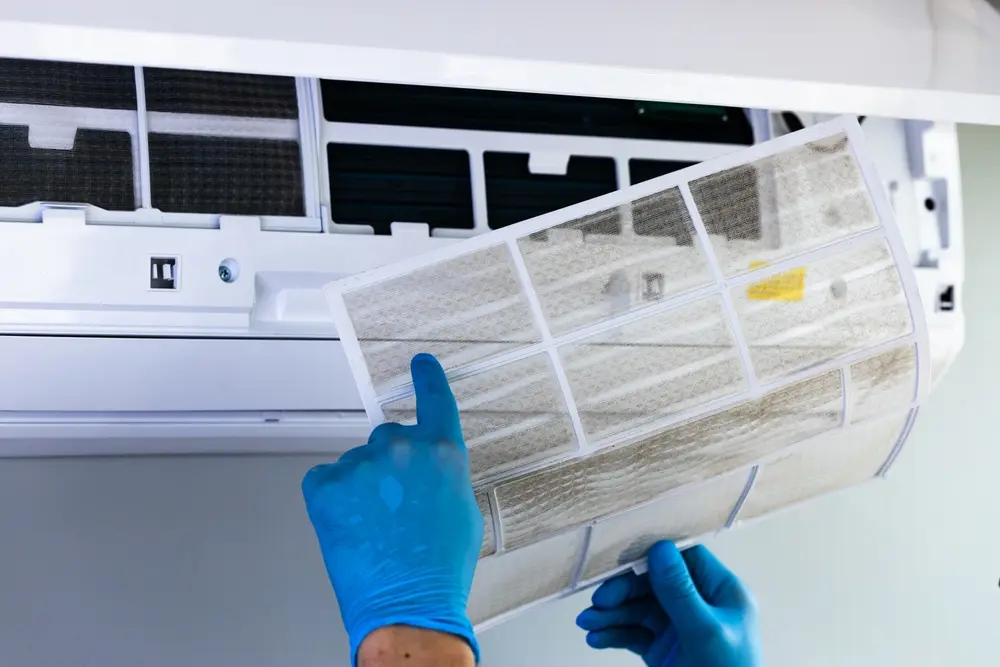
The #1 Indoor Allergen Source in OC Homes. Microscopic dust mite droppings and pet dander particles are the leading triggers for year-round allergies and asthma in Orange County. They accumulate
in bedding, carpets, and upholstered furniture — and circulate through your HVAC system every time it runs. HEPA filtration and proper ductwork sealing are the most effective controls available.
Mold Spores & Biological Contaminants
Marine Layer Humidity Fuels Mold Growth in OC Homes. Orange County's coastal humidity creates ideal conditions for mold growth inside HVAC systems, ductwork, and wall cavities. Evaporator coils are among the most common mold growth sites in Southern California homes. Once mold spores enter the air handler, they spread through every room with every
cycle. UV air purification and humidity control are essential countermeasures.
VOCs — Volatile Organic Compounds
Paints, Cleaners & Furniture Off-Gas Indoors. VOCs are chemical gases released by paints, adhesives, cleaning products, new furniture, and carpeting. Indoor VOC concentrations are consistently 2–5x higher than outdoors. In tight, well-insulated OC homes, these compounds accumulate without adequate ventilation. Whole-home air filtration with activated carbon and smart ventilation systems reduce VOC buildup effectively.
Wildfire Smoke & PM2.5 Particles
SoCal Fire Seasons Push Outdoor Air Indoors. Southern California wildfire seasons push fine particulate matter (PM2.5) through gaps, windows, and standard HVAC filters. PM2.5 particles are small
enough to penetrate deep into lung tissue and cannot be captured by basic 1-inch filters. During high-AQI days, a properly sealed and filtered HVAC system is the primary line of defense for indoor air quality.
Carbon Monoxide & Combustion Gases
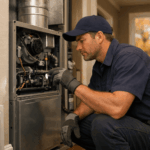
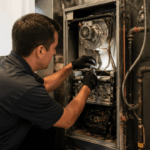
Aging Furnaces Are a Silent Risk in Older OC Homes. Cracked heat exchangers in aging furnaces can leak carbon monoxide directly into your living space — an odorless, colorless, and lethal gas. Pre-1990 homes across Anaheim, Garden Grove, and Santa Ana are at highest risk. Annual furnace inspections, CO detectors on every floor, and proper flue venting are non-negotiable safety requirements for any occupied home.

Why Orange County Homes Face Elevated Indoor Air Quality Risks
Coastal humidity keeps indoor moisture elevated, fueling mold and dust mite growth year-round
PM2.5 infiltrates homes through unsealed ductwork and standard low-MERV filters every fire season.
Dry, high-speed winds carry pollen, dust, and combustion particles directly into HVAC intake vents.
Energy-efficient construction reduces fresh air exchange — trapping pollutants at higher concentrations.
Pre-1990 ductwork in older OC cities harbors decades of dust, mold, and biological buildup.
Every cycle pushes air through your entire home — a dirty system spreads pollutants, a clean one filters them.
By The Numbers
2–5×
Higher VOC levels indoors vs outdoors.
90%
Of time Americans spend indoors.
MERV13+
Filter rating needed to capture PM2.5.
1 in 5
OC children affected by asthma symptoms.
Smart Homeowner Tips For Better Indoor Air In Orange County
- Replace filters every 1–2 months in Orange County — wildfire smoke and coastal pollen clog filters far faster than the national average
- Schedule annual HVAC maintenance including coil cleaning — evaporator coils are the most common mold site in SoCal air systems
- Ask about whole-home air purification with UV or HEPA filtration — standard HVAC filters do not capture PM2.5 or mold spores
- Seal ductwork before wildfire season — leaky ducts pull unfiltered outdoor air and PM2.5 directly into your living spaces
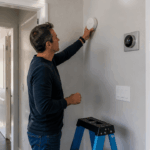
- Install CO detectors on every floor if your home has a gas furnace — cracked heat exchangers produce no odor or visible warning
- Request a ductwork inspection if your home was built before 1990 — aging ducts in Anaheim, Garden Grove & Santa Ana commonly leak